Workplace well-being
Wellness for manufacturing, warehouse and on-the-road employees: what actually works
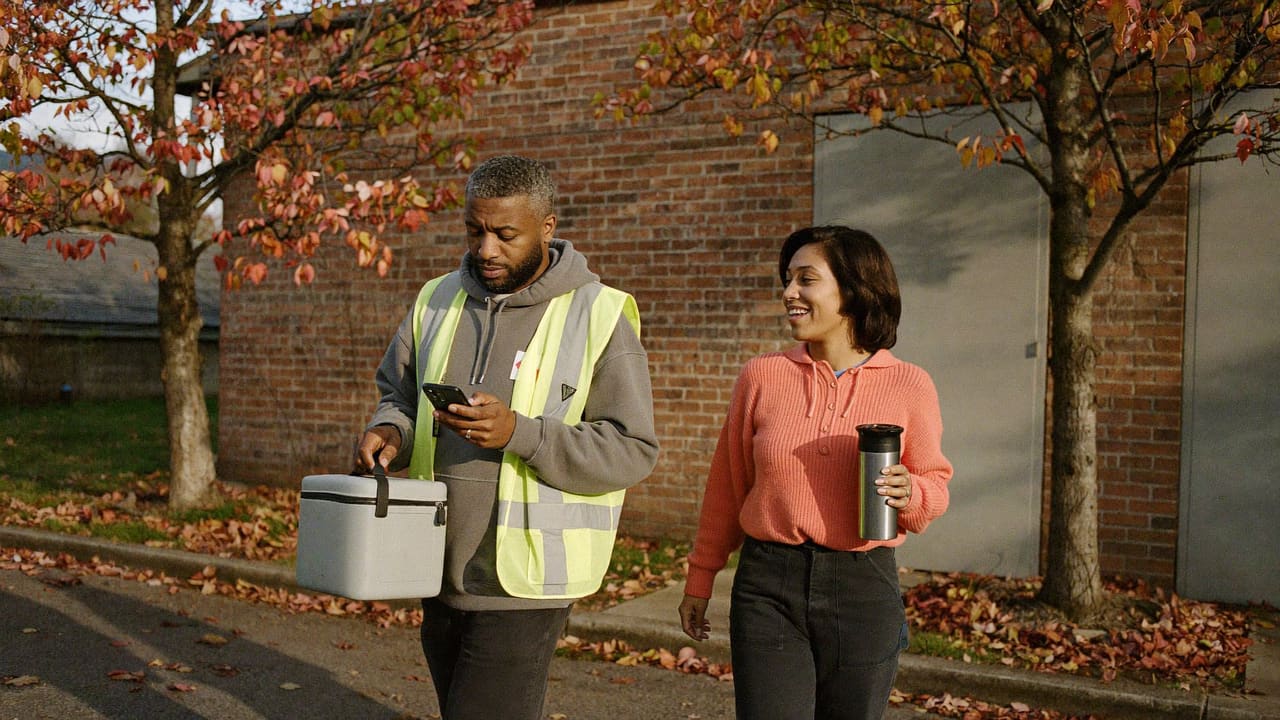
In short: For production, warehouse and on-the-road employees, the program that works reaches them on their personal phone, counts activity at any hour, respects bodies that already work hard and brings shifts together around a shared goal. At Fromagerie Bergeron, in 24/7 production, 78.8% of employees took part.
- According to Statistics Canada (2023), 5.5% of transportation and warehousing workers had a night schedule in April 2022, compared with 1.7% of all workers.
- A program for deskless employees has to pass four filters: access without a computer, schedule, the body and belonging.
- In plants and warehouses, recovery matters as much as effort; on the road, the problem to counter is sitting all day.
- Supervisors, active minutes and a shared cause work across all three profiles.
- At Fromagerie Bergeron, in 24/7 production, 78.8% of employees took part in the team challenge.
For production, warehouse and on-the-road employees, the wellness program that works reaches them on their personal phone rather than by email, counts activity just as much at 3 a.m. as at noon, and brings together teams that never cross paths around a shared goal. At Fromagerie Bergeron, where 300 employees rotate through day, evening and night shifts, 78.8% of staff took part in the team challenge launched with Propulsion.
What these teams are usually offered looks like the opposite: a lunch-and-learn, a gym membership, a newsletter sent to an inbox the night-shift operator never opens. Those programs aren't bad. They were designed for someone with a desk, a computer and a fixed lunch hour.
This article sets out four filters for judging any program aimed at deskless employees, then the levers that hold up for each profile: production floor, warehouse, road.
Why office-designed programs miss the floor
Night work is concentrated in exactly the sectors this article covers. A Statistics Canada study (2023) reports that in April 2022, 1.7% of all workers had a night schedule in their main job. The share rose to 5.5% in transportation and warehousing, and 2.7% in manufacturing.
Non-standard hours go well beyond nights. In Quebec, a study by the Institut de la statistique du Québec (2024), drawing on the April 2022 Labour Force Survey supplement, found that about 21% of men and 17% of women in employment had something other than a regular weekday daytime schedule.
These employees' bodies are already working hard. According to Quebec's workplace safety board, the CNESST (November 2026), ergonomic risks caused more than a third of the roughly 104,000 workplace injuries it accepted in 2025. To launch its first campaign on the subject, it chose the example of a warehouse worker with shoulder tendinitis. Telling that person to "move more", with no nuance, misses the point.
Then there is the law. Since October 2025, Quebec's Bill 27 requires employers to identify and prevent psychosocial risks just as they do physical ones; the CNESST occupational health program on psychosocial risks (October 2025) states that every workplace must identify its risks. Other provinces set their own occupational health and safety rules. A wellness program doesn't replace that work, but it can feed into your prevention plan, provided it reaches the floor too.
Four filters for a program that reaches deskless employees
Before comparing vendors or activities, run each option through these four filters. A program that fails even one of them usually loses a large part of the floor.
1. Access: reaching people without a computer
A production operator doesn't open the intranet between batches. The invitation has to reach them where they are: on their personal phone, from their supervisor at the start-of-shift huddle, on a poster with a QR code next to the time clock. The question to ask a vendor is simple: how many steps between the poster and the first activity counted?
2. Schedule: the same value at 3 a.m. as at noon
Anything that happens live (a lunchtime talk, a 5 p.m. group class) shuts out at least one shift. A program that fits is asynchronous: a walk after a night shift counts as much as the head-office lunchtime walk. Reminders go out at the end of the shift, not at 9 a.m. on Monday.
3. The body: recovery in the plant, movement on the road
Physical needs change with the job. In production and warehousing, the load is already there; the program does better when it values recovery, sleep between shifts, stretching and activity people choose outside work, rather than performance.
On the road, it's the reverse. A University of Waterloo master's thesis (Wawzonek, 2016), based on the 2009-2010 Canadian Community Health Survey, compared 991 truck drivers with nearly 30,000 other male workers. Drivers were roughly half as likely to be physically active (prevalence ratio 0.52) and 1.69 times as likely to be obese. The data is old: read it as an order of magnitude, not a current portrait.
4. Belonging: connecting teams that never meet
The night shift doesn't know the day shift. The field technician sees head office at the holiday party. A shared goal (a distance to cover together, a cause to support) gives these teams something in common to follow. An individual leaderboard does the opposite: it rewards whoever has the time and the gear.
What works, profile by profile
| Profile | Main constraint | What works | Avoid |
|---|---|---|---|
| Shift-based production | Phone often in the locker, three schedules that never overlap | End-of-shift activity logging, active minutes with a daily cap, teams that mix shifts | Live activities at a fixed time |
| Warehouse and distribution | High physical load, ergonomic risks | Recovery, stretching, activity outside work recognized alongside sport | Leaderboards based on the highest step count |
| Road (truck drivers, technicians) | Long hours seated, variable schedules, far from head office | Phone as pedometer, short activities at stops, shared goal across regions | Programs tied to a gym or a fixed location |
Three levers come up in all three profiles:
- The supervisor as the channel: a 30-second announcement at the start-of-shift huddle reaches more people than an email. Give supervisors one sentence to say and one poster to put up.
- Measuring in active minutes: steps depend on a device worn on the body, while active minutes can also be logged afterwards. The mechanics are covered in our article on a step challenge without a smartwatch or phone.
- The cause: a charity goal gives scattered teams a shared purpose. At Fromagerie Bergeron, teams raised $5,000 for Moisson Québec; at Harnois Énergies, $10,000 for the Harnois Énergies Foundation.
For teams spread across regions, a virtual route such as the Cross-Canada Journey turns the distance between sites into a goal rather than an obstacle. That is the approach at Fayolle Canada, with challenges between business units that work on job sites.
What works poorly for these teams
- Lunchtime talks and webinars: they exclude evenings, nights and the road. Recorded, they rarely get watched.
- Gym memberships: a fixed location and opening hours suit neither the night shift nor a driver 400 km from home.
- Apps that require a smartwatch: they measure equipment, not effort, and leave out people whose phone stays in the locker.
- Email-only communication: many production employees rarely check a work inbox, if they have one.
- Individual leaderboards based on step counts: they pick the winners in advance and discourage people whose bodies already work all day.
- Programs launched without the floor: without supervisors and the health and safety committee, they stay an office project.
Where to start: two levers, not ten
First lever: a shared challenge people join by phone, announced at every shift. It's the fastest way to check whether your program reaches the floor. Measure participation by shift and by site, in aggregate only, as explained in our article on measuring wellbeing with anonymous data. A gap between days and nights tells you exactly where to fix things.
Second lever: connect the program to prevention. Present it to the health and safety committee and tie it to risks you have already identified: a stretching break at workstations flagged for ergonomic risk, a recovery activity for the night crew. The program then becomes a concrete part of your prevention plan rather than one more perk.
"When I meet a plant manager, the first question is rarely about budget. It's about the night shift: how will those employees take part? If the answer requires a computer or a fixed time, the conversation ends there."
How Propulsion handles it
Propulsion is a wellness app designed so that a phone is enough. Steps come from the phone's pedometer, and people with a watch connect it: Apple Health, Samsung Health, Garmin and more. Activity the device didn't capture is added by hand with the Add an activity button (see how to log an activity manually), which makes end-of-shift logging possible.
Activity points are capped each day (see how activity points work): consistency earns more than a Sunday feat, and a production employee isn't beaten in advance by the head-office marathoner. Employers only see aggregated results, and data is hosted in Canada.
Two published deployments show what this looks like with deskless teams:
- Fromagerie Bergeron (Saint-Antoine-de-Tilly, Quebec): about 300 employees in 24/7 production, on day, evening and night shifts. The Un BRIN d'exercice team challenge reached 78.8% participation and involved 11 departments. The En mouvement pour Moisson Québec challenge logged 50,000 active minutes and raised $5,000. "The participation rate grows with every challenge, and it's changing their habits at home too," says Stéphanie Couture, tactical marketing coordinator.
- Harnois Énergies (energy distribution): about 2,000 employees across regional offices, service stations and convenience stores, from Quebec to the Maritimes. The La virée HÉ! challenge aimed for 15,500 km covered together; the goal was reached early, then doubled. In the end-of-challenge survey, 88% of participants reported adopting a more active lifestyle, and $10,000 was raised for the Harnois Énergies Foundation.
Employees are active in less than two weeks after the agreement. Employers can also offer a wellness spending account, topped up based on participation, with eligible categories they choose themselves.
Keep reading
If phones aren't allowed on the floor, our guide to a step challenge without a smartwatch or phone covers end-of-shift logging and the offline option. To place the program next to your EAP, read is an EAP enough as a wellness program? And to see how a plant in continuous production went about it, the Fromagerie Bergeron case study covers the rollout across three shifts. To see how a challenge fits your shifts and sites, book a demo.
Frequently asked questions
What wellness program works for frontline and manufacturing employees?
One that people reach on their personal phone, that counts activity done at any hour, and that brings shifts together around a shared goal. A team challenge measured in active minutes, announced by supervisors, is the simplest starting point. At Fromagerie Bergeron, in 24/7 production, 78.8% of employees took part.
How do you reach employees who don't read work email?
Go through supervisors at the start-of-shift huddle, a poster with a QR code next to the time clock, and personal phones. Check with the vendor how sign-up works (email, organization code) before launching anything.
Is a physical challenge a good idea for employees whose job is already physical?
Yes, if it rewards consistency and recovery rather than performance. In Quebec, ergonomic risks caused more than a third of the workplace injuries the CNESST accepted in 2025, so a challenge that pushes people to always do more goes the wrong way. Cap daily points and recognize walking, stretching and activities people choose outside work.
How do you include truck drivers and field technicians?
The phone they already carry is enough to count steps, and short activities at stops can be added by hand. A shared goal across regions gives them a link to the rest of the company, as Harnois Énergies did with 15,500 km to cover between its sites.