HR technology
Top Employee Wellness App Features to Look For in 2026
- Automatic activity tracking is the most important feature to maximize participation without friction
- Team challenges with real-time leaderboards generate 40% more engagement than individual challenges
- An app without integration with existing HR tools creates extra work rather than eliminating it
- Wellness accounts boosted by physical activity are the most differentiating feature on the market in 2026
- Propulsion combines all these features in a single platform designed for the Canadian market
Why Your Wellness App Choice Matters More Than Ever
In 2026, the corporate wellness platform market is saturated. Every week, a new solution promises to transform your employee engagement. The problem: most apps offer the same basic features and differ little on what actually matters to HR teams.
Before investing in a platform, here are the 10 features that separate solutions that deliver results from those that end up abandoned after 3 months.
The 10 Essential Features to Evaluate
1. Automatic activity tracking
The most critical feature. If employees have to enter their data manually, participation drops by 60% by the second week. A good app connects to the phone or smartwatch and automatically syncs steps, active minutes, and calories. Zero friction equals maximum participation.
2. Team challenges with real-time leaderboards
Individual challenges work for already active employees. Team challenges work for everyone. A visible leaderboard updated in real time creates group dynamics that maintain motivation throughout the challenge. Look for a platform that allows creating custom teams with goals adapted to each level.
3. Integrated wellness spending accounts
In 2026, Wellness Spending Accounts have become a standard benefit in competitive Canadian companies. An app that integrates the management of these accounts directly into the platform eliminates an administrative layer and creates a direct link between employee engagement and their financial benefit.
4. Activity-based wellness account bonuses
This is the most differentiating feature on the market in 2026. Rather than a static wellness account with a fixed amount, some platforms automatically boost the account based on the employee's activity level. The more the employee moves, the more their account grows. This is a revolution in long-term engagement.
5. Multi-format content
A good platform offers more than step counting. Look for varied content: health articles, exercise videos, nutrition quizzes, guided meditations, recipes. Content variety maintains engagement for employees who are not interested in sports challenges but still want to participate in the wellness program.
6. Personalized notifications and reminders
Generic reminders are ignored. The best platforms send contextual notifications based on user behavior. An employee who has not walked for 2 days receives a different reminder than the one leading the leaderboard. Personalizing communications increases re-engagement rates by 35%.
7. HR dashboard with key metrics
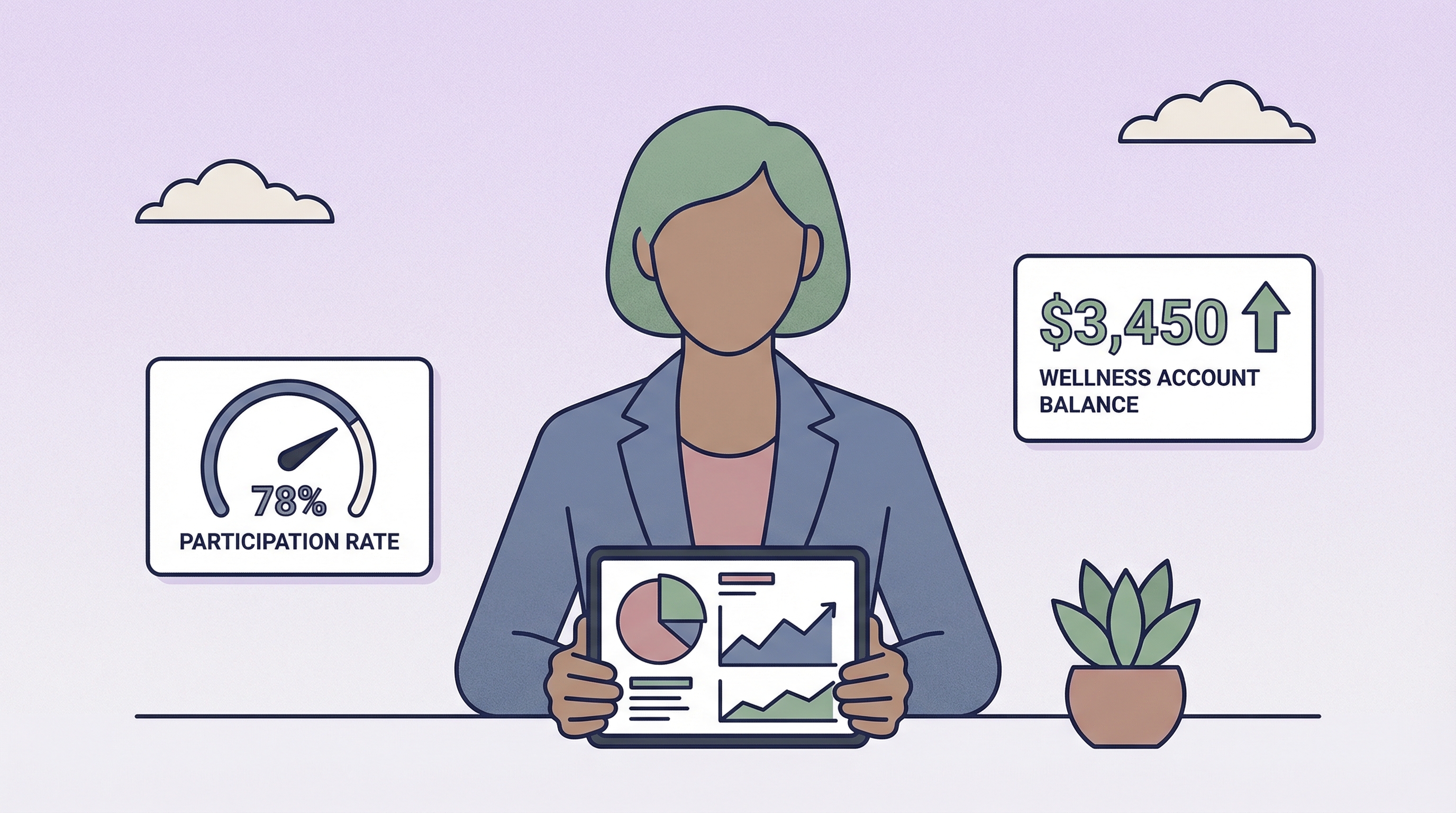
The app must be as useful for HR as for employees. Look for a dashboard that displays participation rate, engagement by department, activity trends, and estimated ROI of the program. This data is essential to justify the wellness budget to management.
8. Multilingual support
Essential for Canadian companies. A platform available in French and English is not a luxury; it is a legal and cultural obligation in some provinces. Check that multilingual support covers the entire experience and not just the main interface.
9. Integration with existing HR tools
A new platform that does not integrate with your HRIS, payroll tool, or intranet creates extra work rather than eliminating it. The best platforms offer native integrations with the most common HR solutions or documented APIs for custom integrations.
10. Data privacy and compliance
Employee health data is sensitive data. Your platform must comply with Law 25 in Quebec, PIPEDA in Canada, and ideally host its data on Canadian servers. Check the privacy policy and explicitly ask where data is stored before signing.
How Propulsion Meets These Criteria
Propulsion was designed specifically for the Canadian market by integrating all these features into a single platform. Automatic activity tracking, team challenges with real-time leaderboards, wellness account management, and activity-based bonuses are at the core of the platform from day one.
The feature of boosting wellness accounts based on physical activity is unique in the Canadian market. The more active an employee is, the more their wellness account automatically grows, creating a positive feedback loop that maintains long-term engagement.
Keep reading
Features only matter for what they serve. The employer guide to wellness spending accounts explains the benefit the platform must administer, 50 employee wellness program ideas the initiatives it must support, and the corporate wellness challenge guide the format that stresses the tool the most.
Frequently Asked Questions
What is the difference between a wellness app and a wellness platform?
A wellness app is generally centered on the individual and their personal habits. A wellness platform is designed for companies and includes team management features, HR dashboards, administration tools, and integrations with enterprise systems. For a corporate wellness program, a platform is always preferable to a simple app.
How much does an employee wellness platform cost?
Prices generally range from $3 to $15 per employee per month depending on the features included. Platforms that include wellness account management may seem more expensive at first glance, but they often eliminate the administrative costs associated with manual management of these accounts.
How do you measure the ROI of a corporate wellness app?
Key indicators to track are absenteeism reduction, improvement in employee engagement scores, decrease in health insurance claims, and retention rate. Companies that measure these indicators before and after implementing a wellness program generally report an ROI of $2 to $6 for every dollar invested.
Should you have a separate wellness app or integrate features into the existing intranet?
A dedicated app systematically generates more engagement than a module integrated into the intranet. Employees associate the intranet with work and obligations. A separate app creates a distinct mental space dedicated to their personal wellbeing, which naturally increases usage frequency.