Workplace well-being
50 Employee Wellness Program Ideas for the Workplace
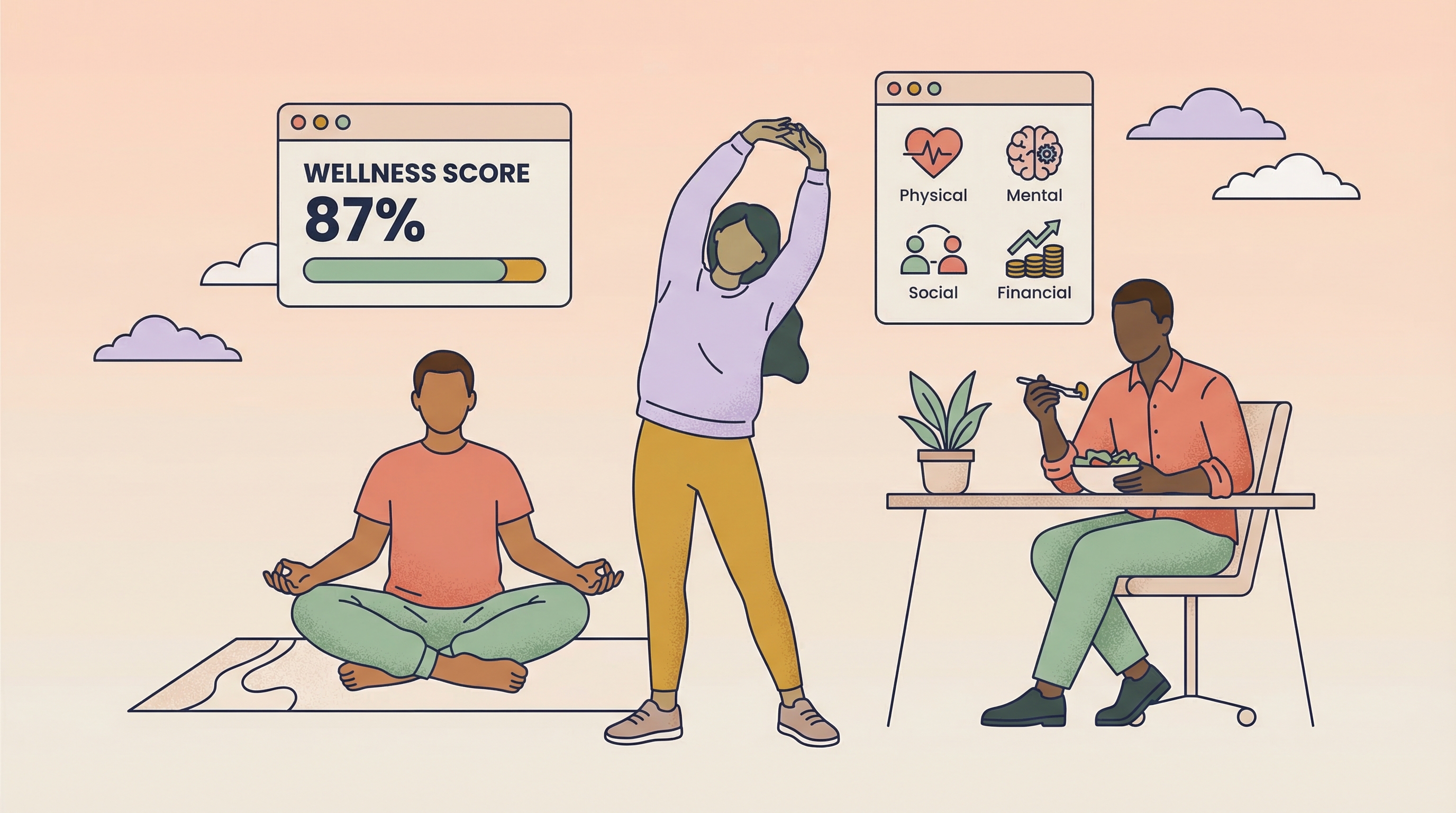
- An effective wellness program covers at minimum 4 dimensions: physical, mental, social and financial
- Programs with recognition and visibility achieve 60% more participation than silent programs
- Offering choice through flexible wellness accounts is the most inclusive strategy to reach all employee profiles
- Free or low-cost initiatives like active breaks and walking clubs often have as much impact as expensive programs
- Propulsion centralizes challenges, wellness accounts and participation tracking in one HR platform
Why a Well-Designed Wellness Program Changes Everything
Most corporate wellness programs fail not because the idea is bad, but because they only reach employees who are already active. The running enthusiast joins the step challenge, the yoga lover signs up for online classes, and the 60% of least active employees remain outside the program entirely.
An effective program covers multiple dimensions of well-being and offers varied formats to reach all profiles. Here are 50 ideas organized by theme to build that program.
Physical Wellness Ideas
The foundation of any wellness program, but the formats make all the difference between a program everyone ignores and one that brings people together.
- Monthly team step challenge: Collective format with real-time leaderboard
- Lunch walking club: 20-minute group outing during the lunch break, no equipment needed
- Guided active breaks: 10-minute sessions twice a week, stretching or light yoga
- Stair challenge: Counting floors climbed, with weekly leaderboard
- Bike-to-work program: Financial incentives for active commuting
- Access to an online class platform: Yoga, pilates, cardio, available 24 hours a day
- Weekly group classes: A different class each week to maintain variety
- Multi-activity challenge: Points for any declared physical activity, not just walking
- Gym membership reimbursement: $30 to $75 per month, simple and appreciated
- Seasonal team sports tournament: Indoor soccer in winter, beach volleyball in summer
Mental Wellness Ideas
The most underinvested dimension in traditional wellness programs, yet the most impactful on retention and absenteeism.
- Access to a meditation app: Calm, Headspace or equivalent, fees covered by employer
- Stress management workshops: Sessions led by a certified psychologist or coach
- Paid mental health day: One additional day per year dedicated to mental rest
- Employee Assistance Program (EAP): Confidential access to psychological resources
- Mindfulness sessions at the office: 10 minutes at the start or end of team meetings
- Right to disconnect policy: No emails after 6pm, clear communication from leadership
- Rest spaces at the office: Quiet zone without computers for recovery breaks
- Sleep quality workshop: Practical webinar on sleep habits and performance
- Team gratitude challenge: One positive message shared in the team channel each morning
- Manager mental health training: Recognizing warning signs and knowing how to intervene
Social Wellness and Cohesion Ideas
Sense of belonging is a major predictor of engagement. These initiatives strengthen bonds between colleagues beyond work meetings.
- Monthly team lunches: Meal budget offered by the employer for each team
- Internal mentorship program: Matching junior and senior employees for 6 months
- Quarterly team building activities: Cooking, escape room, hiking, depending on the season
- Random virtual coffee: A tool randomly pairs two colleagues for a 20-minute coffee chat
- Work anniversary celebrations: Public recognition of 1, 3, 5 and 10-year milestones
- Company book club: One book per quarter, group discussion
- Corporate volunteering: One paid half-day per year to get involved with a nonprofit
- Wins channel on the intranet: Dedicated space to share personal and professional victories
- Annual family event: Open house or outing including employees' families
- Referral program with bonus: Reward employees who recommend hired candidates
Financial Wellness Ideas
Financial stress is one of the most frequent causes of distraction and declining productivity. These initiatives show that the company cares about employees' overall well-being.
- Financial planning workshops: Budgeting, retirement savings, RRSP, led by a financial planner
- Student debt repayment assistance: Monthly employer contribution
- Access to a financial advisor: 2 sessions per year reimbursed
- Negotiated corporate discounts: Insurance, telecom, subscriptions, through employer partnerships
- Savings plan with employer contribution: Group RRSP with employer matching
- Transportation subsidy: Partial reimbursement of public transit costs
Nutritional Wellness Ideas
Diet directly influences energy, concentration and mood: three key factors of workplace performance.
- Fresh fruit at the office: Weekly fruit basket, free for everyone
- Healthy meal prep workshop: Practical batch cooking session led by a nutritionist
- Monthly nutrition challenge: Collective goals around hydration, vegetables or breakfast
- Cafeteria with healthy options featured: Nutritional labeling and strategic positioning of healthy options
- Meal kit service subscription: Negotiated rate for employees who want to eat better
- Monthly nutrition webinar: Practical topics: eating well while working remotely, energizing snacks, hydration
Flexibility and Work-Life Balance Ideas
Flexibility has become the most valued wellness benefit by employees, ahead of gym and bonuses.
- Flexible hours: Mandatory work window of 10am to 3pm, the rest is flexible
- Summer Friday afternoons off: Very popular summer program, limited cost
- Clear hybrid work policy: Transparent and equitable rules for remote work
- Home office budget: $300 to $500 to improve ergonomics of the home workstation
- Enhanced parental leave: Beyond legal requirements, a strong signal of a caring culture
- Sabbatical leave policy: After 5 years, possibility of taking 4 to 8 unpaid weeks
- Progressive return program: Smooth transition after a long-term absence
- Formalized right to disconnect: Written policy, not just verbal
How to Choose and Prioritize Your Initiatives
With 50 ideas in front of you, the temptation is to want to implement everything. The classic mistake: launching 10 initiatives simultaneously, measuring none of them, and giving up after 3 months for lack of visible results.
The approach that works: start with a quick survey of your employees to identify their top 3 priorities. Launch 2 to 3 initiatives with rigorous participation tracking. Measure after 90 days. Adjust, then add new initiatives based on results.
Propulsion simplifies this management by centralizing active challenges, wellness accounts and participation tracking in a single dashboard, without additional administrative burden for the HR team.
Keep reading
These 50 ideas branch by terrain. On movement, workplace physical activity programs that deliver covers what works. On psychological health, 5 mental health strategies for HR teams. For hybrid or distributed teams, keeping remote teams healthy and connected handles that specific case. And if mobilization is the real issue, 20 employee engagement strategies.
The fastest format to launch is still the collective challenge: the complete wellness challenge guide explains why.
Frequently Asked Questions
What budget should you plan for a corporate wellness program?
Budgets vary enormously depending on company size and program ambitions. For a basic program with low-cost initiatives (active breaks, internal challenges, workshops), plan $200 to $500 per employee per year. For a complete program including flexible wellness accounts and substantial benefits, plan $1,000 to $2,500 per employee. The average documented ROI is $3 for every dollar invested through reductions in absenteeism and staff turnover.
How do you measure the effectiveness of a wellness program?
Four indicators are essential: participation rate in initiatives (minimum 50% target), absenteeism rate before and after the program, employee engagement score measured by survey, and annual retention rate. Measure these indicators before the program launch to establish a baseline, then compare at 6 months and 12 months.
How do you include remote employees in the wellness program?
Prioritize remotely accessible initiatives from the program design: flexible wellness accounts, step challenges via mobile app, webinar workshops, access to online class platforms. Avoid programs that require physical presence as the only format: a remote employee who feels excluded from a benefit is an employee at risk of leaving.
Where do you start if you have no wellness program in place?
Three actions to prioritize for the first 90 days: a needs survey among employees, a first simple collective challenge like a team step challenge, and the announcement of a wellness account even if symbolic. These three actions cost little, generate visibility and allow you to take the pulse of your teams before investing in more structured initiatives.